Let's Get Confident with CPR
Learn CPR so you’re ready to step in and save a life when it matters most.


Completely Revised September 23, 2025.
Here’s the revised version with the external links anchored to the most relevant words in the article:
When you think of CPR, you probably picture someone dramatically saving a life on TV. But did you ever stop to wonder where this life-saving skill came from? The origin of CPR is a fascinating journey, weaving together ancient myths, scientific breakthroughs, and real-world heroes. Let’s dive into the history, and maybe—just maybe—you’ll be inspired to step into that hero role yourself one day.
Long before CPR training sessions and instructional manikins, there were myths. Picture ancient Egypt, where the goddess Isis breathes life back into Osiris. It’s poetic, isn’t it? The idea that breath—a simple, invisible force—could conquer death.
Fast forward to the Bible. Prophets Elijah and Elisha both revived children through what can only be described as ancient resuscitation attempts. Whether it was divine intervention or human determination, these stories all had one thing in common: hope. The belief that death doesn’t always have to be final, that a simple act of bravery could change everything.
These stories weren’t exactly backed by science, but they laid the foundation for what CPR represents: the unwavering hope that life can be restored if someone is brave enough to try.
By the 18th century, hope met science. In 1740, the French Academy of Sciences declared mouth-to-mouth resuscitation a viable method for saving drowning victims. The simplicity of “blowing life back” caught on quickly, even as skeptics stood by with raised eyebrows.
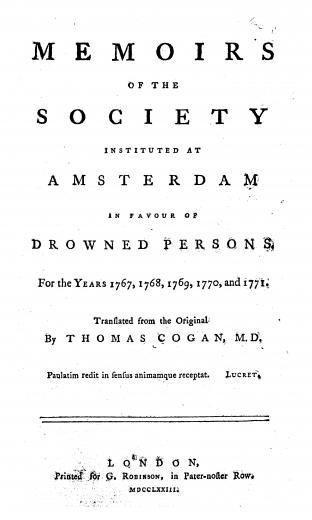
Then came Amsterdam, where the Society for the Recovery of Drowned Persons was established in 1767—the first organized effort to tackle sudden death. Their tools were basic: bellows to inflate lungs, warm blankets, and encouragement for bystanders to act. It wasn’t perfect, but it was progress.
The 19th century was a time of experimentation. Dr. Marshall Hall proposed flipping patients back and forth to stimulate breathing—a method that was, well, more exhausting than effective. Dr. Henry Silvester later introduced rhythmic arm movements to mimic breathing, and the Silvester Method became the go-to technique for decades.
While these methods weren’t flawless, they showed that resuscitation could evolve with experimentation. Each step brought us closer to the CPR we know today.
Fast forward to the 1950s. Enter Dr. Peter Safar and Dr. James Elam, the pioneers who put modern CPR on the map. Their research was revolutionary: they discovered that mouth-to-mouth breathing reliably delivered oxygen to the lungs, debunking older methods that had been more guesswork than science.
But for Safar and Elam, discovery wasn’t enough. They understood that science alone couldn’t save lives—it had to be shared. Together, they taught this technique to soldiers, lifeguards, and yes, everyday citizens who weren’t afraid to get their hands dirty. They were people who knew that when life hung in the balance, hesitation was not an option.

Now, let’s talk about the face of CPR: Resusci Anne. If you’ve ever practiced on a CPR manikin, you’ve met her. But did you know her story? Anne’s face is modeled after “L’Inconnue de la Seine,” a young woman who drowned in the River Seine in the late 19th century. Her serene expression captured the imagination of a pathologist who created a death mask (a plaster cast of her face made after death), turning her into an icon.
In the 1960s, Norwegian toy maker Asmund Laerdal teamed up with Safar to create a realistic CPR training manikin. Inspired by his own experience saving his son from drowning, Laerdal chose Anne’s face as a symbol of lost potential—a reminder of why CPR matters. The result? A tool that transformed CPR training worldwide, giving millions of people the confidence to save lives.

By the 1970s, CPR had reached Australia, but its teaching methods were all over the place. Recognizing the need for a standardized approach, the Australian Resuscitation Council (ARC) was established in 1976.
The ARC united key organizations like the Red Cross, Heart Foundation, and ambulance services to create uniform guidelines. Their mission was simple: make CPR easy to teach, learn, and remember. Today, the ARC continues to lead the charge, ensuring that CPR training is backed by the latest science while remaining accessible to all Australians.
Over the years, CPR has saved millions of lives—not just because of its technique, but because of its accessibility. Public AEDs (Automated External Defibrillators) now complement CPR in airports, workplaces, and schools, bridging the gap between bystanders and professional care.
Imagine this: a parent reviving their child at a local pool. A stranger saving a commuter on a train. These aren’t just hypothetical scenarios; they’re real stories made possible by CPR’s evolution and the courage of ordinary people.

The origin of CPR isn’t just a history lesson—it’s a call to action. It reminds us that every innovation, every technique, and every guideline came from the belief that saving a life is always worth the effort.
Here’s the takeaway: you don’t need to be a doctor, a scientist, or a superhero to make a difference. You just need to be willing to act. Because when it comes to CPR, the real hero isn’t the method or the manikin—it’s you.
CPR isn’t just a skill; it’s a legacy. A legacy built by myths, science, and everyday heroes. And now, it’s your turn to carry it forward. Learn CPR. Practice it. Share it.
Because history doesn’t just belong to the past—it’s made every day, by people like you.
Join a CPR course today and become part of the story that keeps hope alive.


